Dinosaur Documentaries
For most children around the world, “Dinosaurs” and “Jurassic Era” represent a mysterious kingdom and an “Adventure Paradise” that fascinates them. Whether children see “dinosaurs” in movies or in real museums, they fantasize about exploring this “Adventure Paradise”.
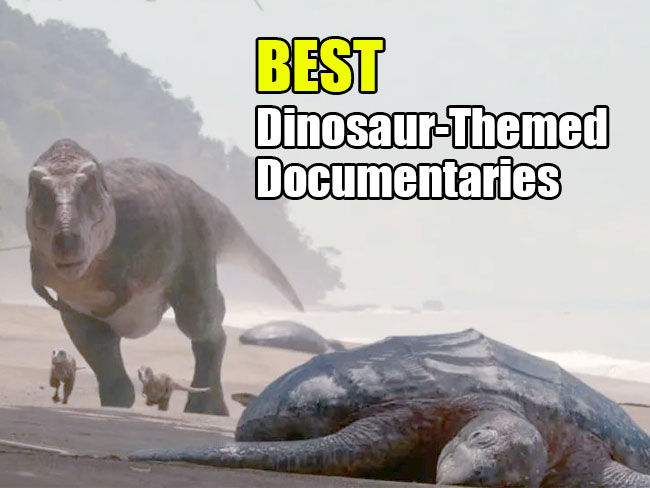
Having worked with dinosaur-themed stuff for over a decade, we recommend ten must-see documentaries on the themes of “dinosaurs” or “prehistoric times” for the year 2026. These are excellent choices for children to explore “adventure paradise” and also great for spreading natural knowledge.
Information Board:
#1. Walking With Dinosaurs
#2. Prehistoric Planet
#3. Reign of Dinosaurs
#4. Prehistoric Park
#5. Dinosaur Planet
#6. Sea Monsters: A Walking with Dinosaurs Trilogy
#7. Last Day of the Dinosaurs
#8. Sea Monsters: A Prehistoric Adventure
#9. Dinosaur Revolution
#10. First Life
#11. The Dinosaurs
#12. The Tale of White Stripe
1. Walking With Dinosaurs
Walking with Dinosaurs is a 1999 six-part nature documentary television miniseries created by Tim Haines and produced by the BBC Science Unit, the Discovery Channel and BBC Worldwide, in association with TV Asahi, ProSieben and France 3. Envisioned as the first “Natural History of Dinosaurs”, Walking with Dinosaurs depicts dinosaurs and other Mesozoic animals as living animals in the style of a traditional nature documentary. The series first aired on the BBC in the United Kingdom in 1999 with narration by Kenneth Branagh. The series was subsequently aired in North America on the Discovery Channel in 2000, with Avery Brooks replacing Branagh.
Walking with Dinosaurs recreated extinct species through the combined use of computer-generated imagery and animatronics that were incorporated with live action footage shot at various locations, the techniques being inspired by the film Jurassic Park (1993). At a cost of £6.1 million ($9.9 million), Walking with Dinosaurs cost over £37,654 ($61,112) per minute to produce, making it the most expensive documentary series per minute ever made. The visual effects of the series were initially believed to be far too expensive to produce, but innovative techniques by the award-winning graphics company Framestore made it possible to bring down costs sufficiently to produce the three-hour series.
Walking with Dinosaurs was the brainchild of Tim Haines, who came with the idea in 1996 while he was working as a science television producer at the BBC. Then-head of BBC Science Jana Bennett had at the time started a policy of encouraging producers to pitch possible future landmark series, with the goal of increasing the science output of the BBC and raising the bar of science programming. Bennett had mainly asked for suggestions for series on geology, medicine and natural history. The idea for Walking with Dinosaurs was devised in the aftermath of the release of the film Jurassic Park in 1993, which had set a new benchmark for dinosaur entertainment. Initially, Haines idea revolved around a history of palaeontology with some reconstructions but this was deemed to not be ambitious enough. Shortly thereafter, he devised the idea of a dinosaur series made with the look and feel of a natural history programme.
2. Prehistoric Planet
Prehistoric Planet is a nature documentary television series about prehistoric animals that premiered on Apple TV beginning May 23, 2022. The first two seasons (2022–23) are produced by the BBC Studios Natural History Unit, with Jon Favreau as showrunner, visual effects by The Moving Picture Company, and narration by natural historian Sir David Attenborough. These seasons follow dinosaurs and other prehistoric animals, recreated with computer-generated imagery, living around the globe in the Late Cretaceous period 66 million years ago (Maastrichtian), just before the non-avian dinosaurs’ extinction. The show intends to reflect modern palaeontological research, with informed depictions of prehistoric life alongside speculative animal behavior.
According to palaeontologist and consultant Steve Brusatte, the series had been in development “a decade” prior to its trailer release. On May 8, 2019, it was first reported by Deadline that Apple had ordered a new documentary series by BBC Studios titled Prehistoric Planet, to be executively produced by Jon Favreau. An original score was composed by Kara Talve, Anže Rozman and Hans Zimmer.
The series uses up-to-date palaeontological research to depict its animals of the Cretaceous with scientific rigour; for example, feathered dinosaurs are featured in the series, such as juvenile Tyrannosaurus rex. Palaeozoologist Darren Naish was the lead consultant for the depictions of prehistoric life in the series. The storyboarding (using scripts and synopses by BBC NHU), concept art and creature designs were created by Jellyfish Pictures,[11] while computer-generated imagery was developed by The Moving Picture Company and intended to be photorealistic, as with their previous productions The Jungle Book (2016) and The Lion King (2019).
3. Reign of Dinosaurs
How did early dinosaurs such as the tiny Eoraptor, evolve into giant carnivores such as the Tyrannosaurus Rex? Explore the latest paleontological discoveries.
Evolution’s Winners
How did early dinosaurs such as the tiny Eoraptor, evolve into giant carnivores such as the Tyrannosaurus Rex? Explore the latest paleontological discoveries.
The Watering Hole
Investigate the complex social systems of dinosaurs including flying reptiles, giant sauropods and huge carnivores at the site of an ancient watering hole.
Survival Tactics
Find out how different dinosaur species adapted to survive, including Rahonavis, which evaded predators by running up trees and Utahraptors which hunted in packs.
End Game
A look at the family dynamic of the mighty Tyrannosaurus Rex and explore the aftermath of the asteroid that wiped out the majority of the dinosaur population.
4. Prehistoric Park
The programme is narrated by David Jason and presented by Nigel Marven. The fictional component is the theme that Nigel goes back to various geological time periods through a space-time portal, and brings live specimens of extinct animals back to the present day, where they are exhibited in a wildlife park named Prehistoric Park, which is a big area between high steep mountains and ocean, with varied environments, in what looks like KwaZulu-Natal province in South Africa.
The story, which is told in the style of a documentary, focuses on naturalist Nigel Marven leading missions to find and collect extinct animals from the distant past by use of a time machine. The animals are then placed in the confines of Prehistoric Park, a private wildlife park that is situated in a dry, mountainous region of an unspecified part of the world. Marven’s core motivation in the series is to defy extinction and to give select extinct species a second chance at life.
5. Dinosaur Planet
Dinosaur Planet is a four-part American nature documentary that aired on the Discovery Channel as a special-two night event on December 14 and 16, 2003. It is hosted by paleontologist Scott Sampson and narrated by actor Christian Slater. It was released on DVD as a two-disc pack on February 17, 2004,[2] and was also released on VHS around the same time.
The format is similar to Discovery’s earlier series When Dinosaurs Roamed America. Each episode tells a fictionalized account of a dinosaur from the Late Cretaceous period. The animals are recreated with computer-generated imagery and composited into present-day filmed locations that approximate prehistoric Earth. Periodic interludes (three in each episode) feature Scott Sampson explaining the scientific findings behind the story, also similar to When Dinosaurs Roamed America, but has improved in quality.
6. Sea Monsters: A Walking with Dinosaurs Trilogy
Sea Monsters, marketed as Chased by Sea Monsters in the United States, is a 2003 three-part nature documentary television miniseries created by Impossible Pictures and produced by the BBC Studios Science Unit, the Discovery Channel and ProSieben. Following in the footsteps of The Giant Claw (2002) and Land of Giants (2003), special episodes of the nature documentary series Walking with Dinosaurs, Sea Monsters stars British wildlife presenter Nigel Marven as a “time-travelling zoologist” who travels to seven different periods of time in prehistory, diving in the “seven deadliest seas of all time” and encountering and interacting with the prehistoric creatures who inhabit them. The series is narrated by Karen Hayley in the BBC version and by Christopher Cook in the American version.
As with previous documentaries in the Walking with… franchise, Sea Monsters recreated extinct animals through a combination of computer-generated imagery and animatronics, incorporated into live action footage shot at various locations. The visual effects of Sea Monsters, as with previous series, received praise and won a BAFTA TV Award. For his role as the presenter of the series, Marven was nominated for a Royal Television Society Programme award. Though some reviewers praised Marven’s energetic and enthusiastic “animal-grabbing” style of presentation, others considered a wildlife presenter to be unnecessary or even “patronising”, paralleling debates on the merits of wildlife presenters in documentaries on modern-day animals.
7. Last Day of the Dinosaurs
Last Day of the Dinosaurs is a 2010 Discovery Channel television documentary about the K-T extinction, which resulted in the extinction of the non-avian dinosaurs. It portrays the Alvarez hypothesis as the cause of extinction. The documentary was released on August 28, 2010 and narrated by Bill Mondy.
The dinosaur models created for the 2009 series Clash of the Dinosaurs were reused for this program. The Parasaurolophus model was used for Charonosaurus (even though the legs of Charonosaurus were shorter than those of Parasaurolophus). The Deinonychus model was used for Saurornithoides (rather inaccurately, as Saurornithoides was slenderer than Deinonychus), and the Sauroposeidon model was used for Alamosaurus (even though Alamosaurus had different proportions than Sauroposeidon). The same Tyrannosaurus rex, Triceratops, Ankylosaurus, and Quetzalcoatlus models were also used. These models were placed upon different backdrops most of the time than those used in Clash of the Dinosaurs.
8. Sea Monsters: A Prehistoric Adventure
Sea Monsters: A Prehistoric Adventure (also called Sea Monsters) is a 2007 American IMAX 3D documentary film by National Geographic, about prehistoric marine reptiles. It alternates modern-day sequences about the work of scientists studying the animals with computer-animated scenes depicting the prehistoric past. Sea Monsters was well received by critics. The tie-in video game, however, was heavily criticized.
Brings to life some of the most bizarre, ferocious and fascinating creatures to ever inhabit the ocean. Combines animation with recreations in a prehistoric adventure. A journey to the bottom of the ancient oceans dramatizes awe-inspiring creatures.
9. Dinosaur Revolution
Dinosaur Revolution is a four-part American nature documentary produced by Creative Differences. It utilizes computer-generated imagery to portray dinosaurs and other animals from the Mesozoic era. The program was originally aired on the Discovery Channel and Science.
Although Dinosaur Revolution was the first dinosaur documentary to feature a darker, more serious and violent adult atmospheric tone and the first to have been targeted towards a 13 and 14 year old audience, it served as a reimagining of the comic book series Age of Reptiles, and also included various comedic elements in some of its segments.
10. First Life
“First Life” generally refers to the earliest organisms on Earth, appearing roughly 3.5 to 4.1 billion years ago as microscopic, single-celled organisms. Key contexts include David Attenborough’s 2010 documentary on the Cambrian explosion, research into abiogenesis (how life began), and related media including virtual reality experiences and specialized insurance services from First Life
Related Topics:
- First Life (TV Series): A 2010 documentary narrated by David Attenborough, focusing on the first complex organisms.
- First Life (VR): An immersive 8K 360-degree video experience showcasing ancient sea creatures.
- First Life (Insurance): First Life is a company specializing in insurance under First Financial Holding Co., founded in 2008.
- First Life (Gaming): A mechanic found in the game Expedition 33.
#11. The Dinosaurs
The Dinosaurs is a 2026 American television nature documentary miniseries produced by Amblin Documentaries and Silverback Films. Executive-produced by Steven Spielberg, series directed by Nick Shoolingin-Jordan and narrated by Morgan Freeman, the four-part series focuses on the history of dinosaurs from their appearance in the Triassic period until their demise in the Cretaceous–Paleogene extinction event. A successor to Life on Our Planet (2023), the series was released on Netflix on March 6, 2026.
In May 2024, Silverback Films announced that the ‘next iteration’ of Life on Our Planet will be a four-part miniseries focused on the ‘rise and fall of the dinosaurs’ spanning 170 million years. The new series will also be made by the same production team as Life On Our Planet.[1] The title of the series was revealed in January 2026, and the release date of the series was announced to be in the first quarter of 2026.[2] On February 5, 2026, Netflix released the official trailer for the series, which was marketed as the spiritual successor to Life on Our Planet.
#12. The Tale of White Stripe
“The Tale of White Stripe” is a 2026 dinosaur documentary featuring a Carnotaurus named White Stripe, who rules a Patagonian valley 69 million years ago. He journeys from his isolated territory to find a mate, facing challenges, navigating with his scent, and protecting his new partner from threats like the mape.
Key Details of the Tale:
- The Protagonist: White Stripe is a Carnotaurus, a master of his valley.
- The Journey: He leaves his safe territory, seeking a mate, and trades security for a legacy.
- Environmental Hazards: He navigates a dry landscape and faces a storm.
- Interactions: He encounters armored Saltasaurus, watches feeding Dreadnoughtus, and meets an armored Parankyosaurus.
- The Conflict: White Stripe battles a mape to protect his mate, Grace, within a basalt castle.
Summarize
These 12 dinosaur-themed documentaries can help your children have a comprehensive understanding of the “prehistoric world”. Not only can they inspire their interest in exploring unknown fields, but also effectively help them acquire knowledge about nature. These 12 popular dinosaur-themed documentaries are definitely the best choice for your family to watch together.